
Every Visit to Gwangjang Market Ends in the Yukhoe Alley
Whenever I visit Gwangjang Market, I somehow end up in the yukhoe alley before heading home.
I’ve tried the famous bindaetteok, kalguksu, and plenty of other market food over the years, but after wandering around the market, I always find myself craving yukhoe. At this point, it’s simply become part of my routine.
I’ve eaten at most of the well-known yukhoe restaurants here, including Buchon Yukhoe. While I understand why they’re popular, many of them had a slightly metallic, bloody flavor that just wasn’t for me.
Zamezip was different.
The beef tasted noticeably cleaner, and the rich aroma of sesame oil made every bite easy to enjoy. Since then, whenever I want yukhoe in Gwangjang Market, Zamezip is the place I come back to.
If you’re trying to decide where to eat yukhoe in Gwangjang Market, here’s why Zamezip No. 2 has become my personal favorite after visiting several different restaurants.

Why I Always Choose Zamezip.
Zamezip has been serving yukhoe in Gwangjang Market since 1974, making it one of the market’s longest-running restaurants. Today, there are three branches located just a short walk from one another.
I’ve visited both the original restaurant and No. 2 several times.
The original branch always feels much busier and a little chaotic during meal times. No. 2, on the other hand, feels slightly more relaxed, and the dining area always seems cleaner and better organized.
Can I honestly say the food tastes different?
Probably not.
But somehow, I always enjoy my meals a little more at No. 2. Maybe it’s the atmosphere, or maybe it’s simply personal preference. Either way, it’s the branch I naturally return to whenever I’m back in the market.
If both the original restaurant and No. 2 have long lines, I wouldn’t hesitate to visit No. 3 instead. The three branches are only a short walk apart, and I’ve never noticed any significant difference in quality.
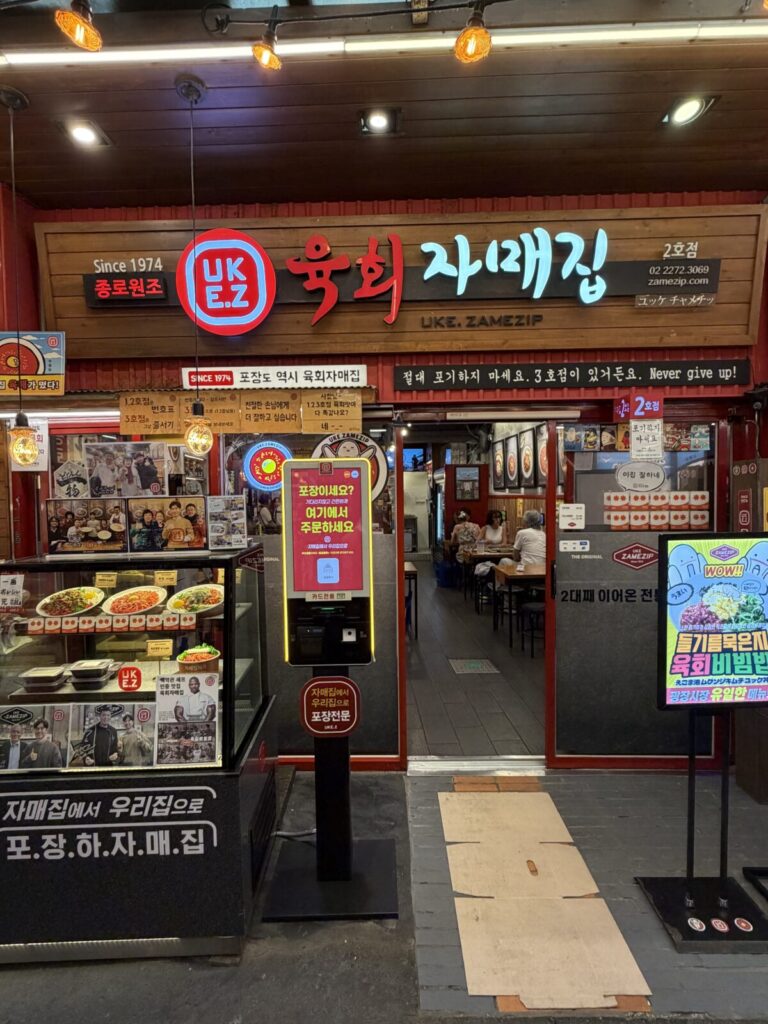
A Popular Restaurant for Both Locals and International Visitors
Zamezip has been featured on numerous Korean TV shows over the years, so it’s no surprise that the restaurant stays busy throughout the day.
During my visit, I saw families, couples, solo diners, office workers, and plenty of international travelers enjoying their meals together.
Although it’s located inside one of Seoul’s oldest traditional markets, the restaurant felt much more modern than I expected.
The dining room was bright, clean, and well maintained. One detail that stood out was the colorful LEGO display along one wall, which added a fun touch to the otherwise simple interior.
Most tables seat two or four people, and the staff are happy to rearrange them if you’re visiting with a larger group.
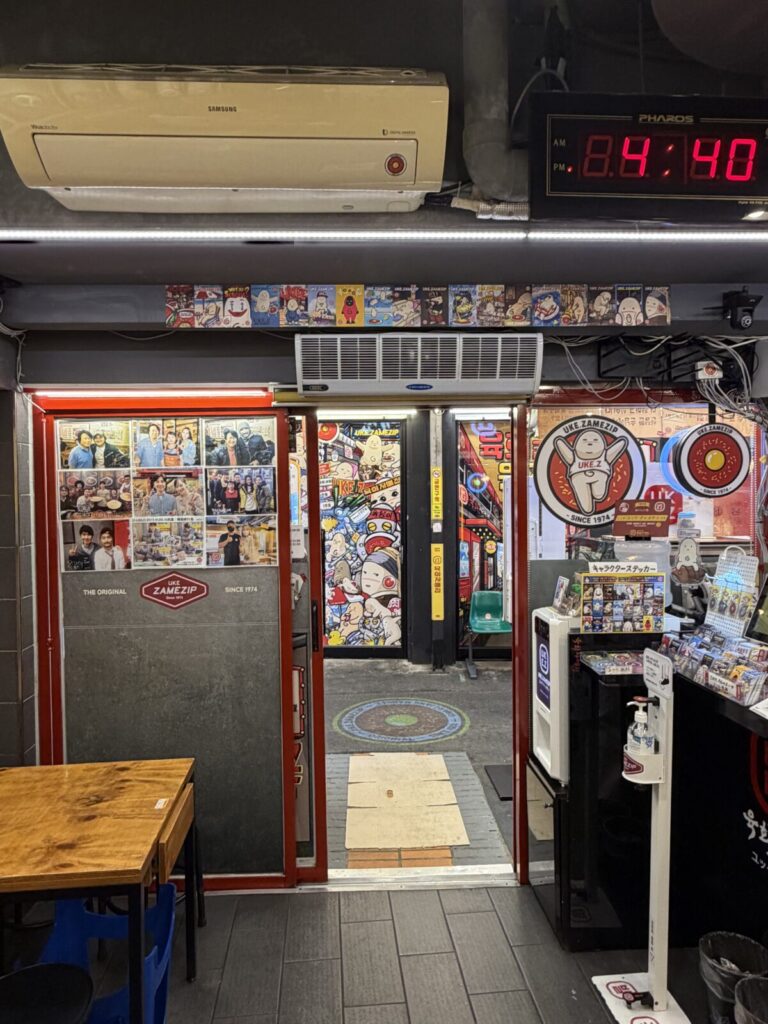
Ordering Is Easy, Even for First-Time Visitors
One thing that surprised me was the ordering system.
Instead of calling over a server, every table is equipped with a touchscreen tablet that supports multiple languages, including English.
Each menu item includes photos, making it easy to understand what you’re ordering even if you don’t speak Korean.
I also liked being able to browse the menu at my own pace without feeling rushed.

Don’t Skip the Complimentary Beef and Radish Soup
Before the yukhoe even arrived, a steaming bowl of beef and radish soup was placed on the table.
Honestly, this is the first thing I look forward to every time I visit Zamezip.
The broth is warm, slightly spicy, and incredibly comforting. It wakes up your appetite before the raw beef arrives and pairs surprisingly well with a glass of soju.
The bowl is filled with generous chunks of Korean radish and much more beef than you’d expect from a complimentary side dish.
I’ve visited several times, and the seasoning does vary slightly. Sometimes it’s a little saltier, while other visits have been milder. This time, though, it was perfectly balanced.
As I finished my bowl, one of the staff members noticed and offered a refill before I even had to ask.
It wasn’t a huge gesture, but it left a great impression. After several visits, I can understand why some regular customers say they’d come back just for this soup.

If It’s Your First Time, Order the Yuktangyi
Whenever I bring friends here for the first time, this is the dish I recommend without hesitation.
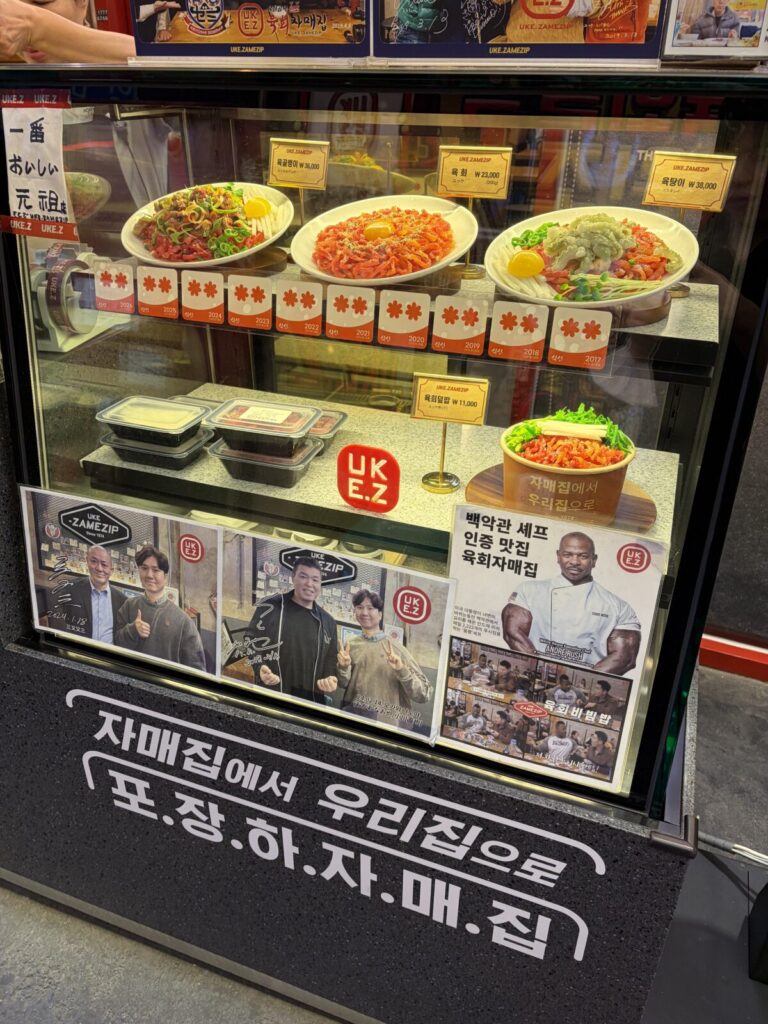
Yuktangyi is Zamezip’s signature dish, combining yukhoe (Korean-style seasoned raw beef) and sannakji (freshly chopped live octopus) on one plate.
If you’ve never had yukhoe before, the easiest way to think of it is as Korea’s version of beef tartare. Both dishes are made with high-quality raw beef, but yukhoe is typically seasoned with sesame oil, sesame seeds, and slices of Korean pear, giving it a lighter, nuttier flavor.
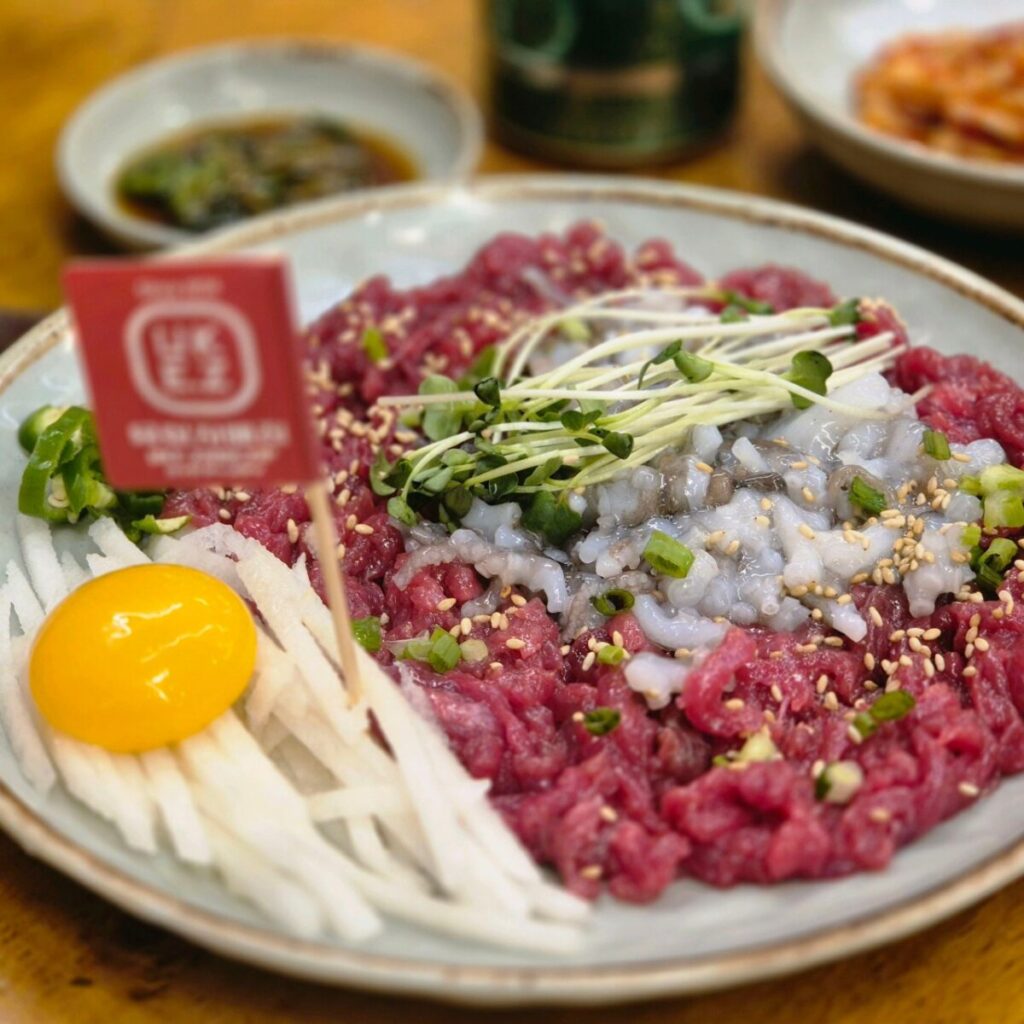
The other half of the plate features sannakji.
If you’re unfamiliar with Korean seafood, imagine a much smaller and more tender type of octopus than the large octopus commonly served in many Western countries. It’s chopped into bite-sized pieces while still alive, so the tentacles continue to move for a while because of their active nerve endings.
It can be a surprising sight if you’ve never seen it before.
If you’ve watched the Korean film “Oldboy“, you might remember the famous restaurant scene where the main character eats a live octopus. This is the same ingredient, but here it’s served in a much more approachable way. Instead of eating the octopus whole, it’s finely chopped and enjoyed together with yukhoe.

The dish is completed with a raw egg yolk, sliced Korean pear, and fresh radish sprouts.
Personally, I think the sesame oil dipping sauce brings everything together. The tender beef, the chewy octopus, and the rich aroma of sesame oil create a combination that keeps me coming back every time I visit Gwangjang Market.

The Classic Yukhoe Is Worth Ordering on Its Own
While Yuktangyi is the restaurant’s signature dish, the classic yukhoe deserves just as much attention.
It’s served with plenty of toasted sesame seeds, thin slices of Korean pear, and roasted seaweed. The presentation is simple, but everything on the plate works well together.
My favorite way to eat it is to place a slice of pear and a small portion of yukhoe on a piece of seaweed before taking a bite.
The sweetness and crunch of the pear balance the richness of the raw beef perfectly, while the seaweed adds a light savory note without overpowering the meat.
For me, one of the most important elements of good yukhoe is the sesame oil.
The quality of the beef certainly matters, but the rich, nutty aroma of sesame oil is what ties everything together. The yukhoe is delicious on its own, but dipping it lightly into the sesame oil and salt makes the flavor even richer.
After trying several famous yukhoe restaurants around Gwangjang Market, the biggest reason I keep coming back to Zamezip is how clean the beef tastes.
Some places leave behind a slightly metallic flavor that isn’t really my preference. Here, I rarely notice that, which makes the dish much easier to enjoy from the first bite to the last.
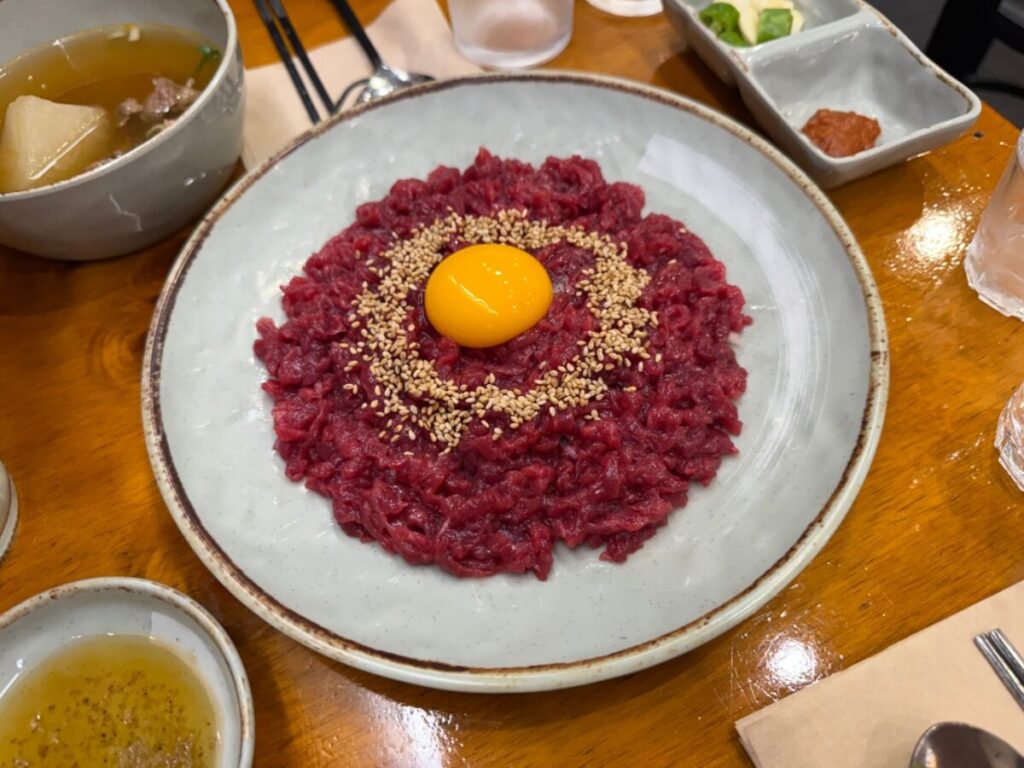
Yukjeon Is the Perfect Warm Dish
After eating cold dishes like yukhoe and sannakji, I usually find myself craving something warm.
That’s when I order the Yukjeon.
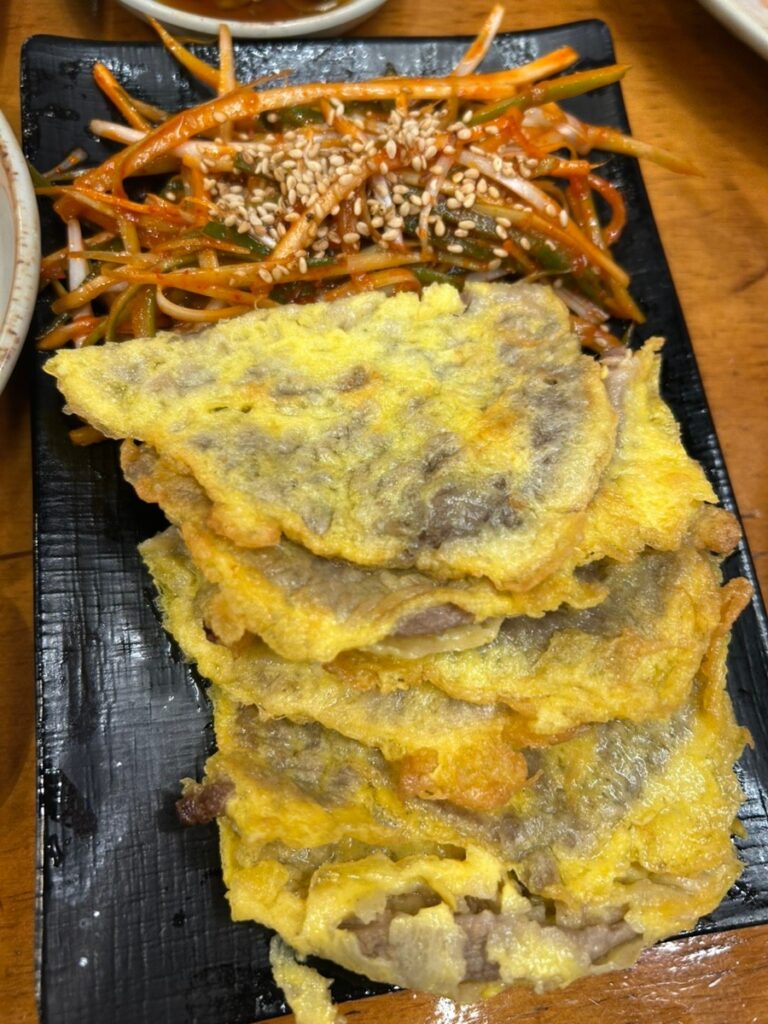
Thin slices of beef are coated in egg and lightly pan-fried until golden, creating a simple but comforting dish that contrasts nicely with the cold appetizers.
Don’t skip the seasoned green onions served on the side.
The fresh, slightly tangy flavor cuts through the richness of the beef, making each bite feel lighter and more balanced.
Alternating between the cold yukhoe and the warm yukjeon also keeps the meal from feeling repetitive.
It may not be the restaurant’s most famous menu item, but it’s one I would happily order again.
Yukhoe Bibimbap Was the Perfect Way to Finish
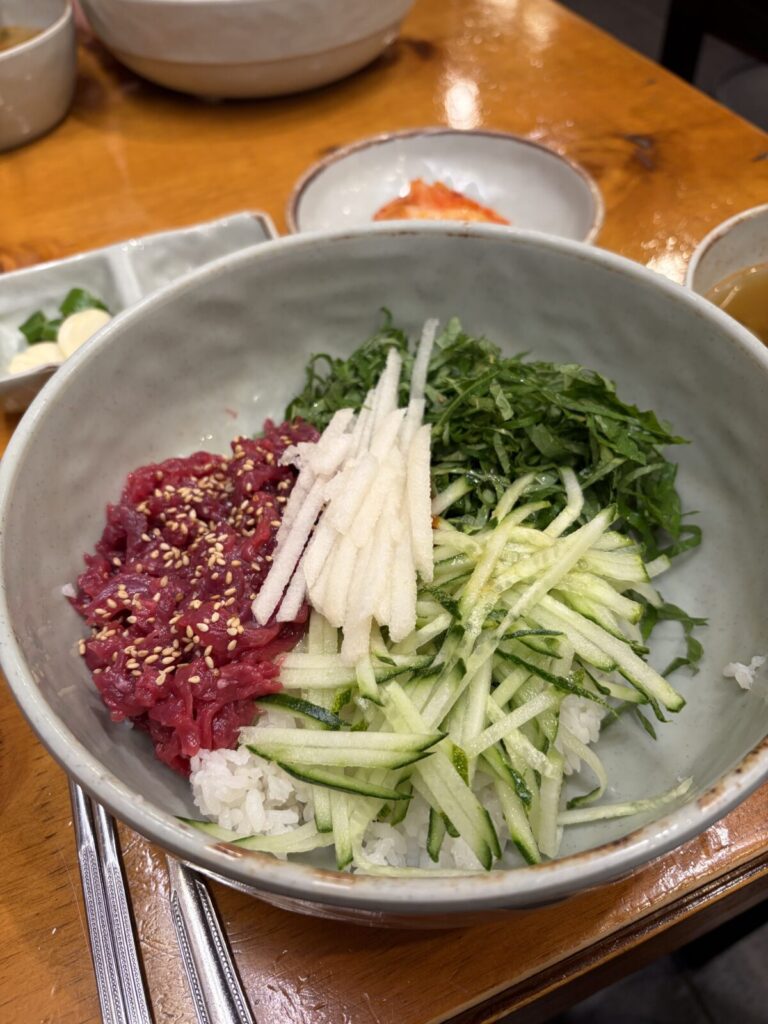
To finish the meal, I ordered the Yukhoe Bibimbap.
Compared to the other dishes, it looked fairly simple at first, but it ended up being one of the most satisfying parts of the meal.
The bowl was topped with seasoned raw beef, shredded perilla leaves, cucumber, Korean pear, and other fresh vegetables. Once everything was mixed together, the different textures worked beautifully with the warm rice.
One thing I noticed was that the restaurant doesn’t add much gochujang by default.
Since Zamezip welcomes so many international visitors every day, I wondered if they intentionally keep the seasoning mild for first-time travelers. That’s only my personal guess, though.
As someone who enjoys stronger flavors, I asked for extra gochujang.
After adding a little more, the balance was much closer to my personal taste.
If you’re sensitive to spicy food, the default seasoning will probably be just right. Otherwise, don’t hesitate to ask for a little extra sauce.
What I’d Recommend Ordering
If it’s your first visit to Zamezip, this is the combination I’d recommend.
Start with the Yuktangyi to experience the restaurant’s signature dish.
Then order the Yukjeon to add a warm contrast to the meal.
Finally, finish with the Yukhoe Bibimbap for a satisfying and filling ending.
For two people, this combination offers a great variety of flavors and textures without feeling overwhelming. It’s the order I recommend most often to friends visiting Gwangjang Market for the first time.
Helpful Tips Before You Visit
Ordering Is Easy with the English Tablet Menu
Every table is equipped with a touchscreen tablet that supports multiple languages, including English.
Each dish comes with photos, making it easy to order even if you don’t speak Korean. I also liked being able to browse the menu at my own pace without having to call over a server.
Water Is Self-Service
Inside the restaurant, you’ll notice a sign that says water is self-service.
Instead of waiting for the staff, simply grab a bottle of water from the refrigerator whenever you need one.
Takeout Is Also Available
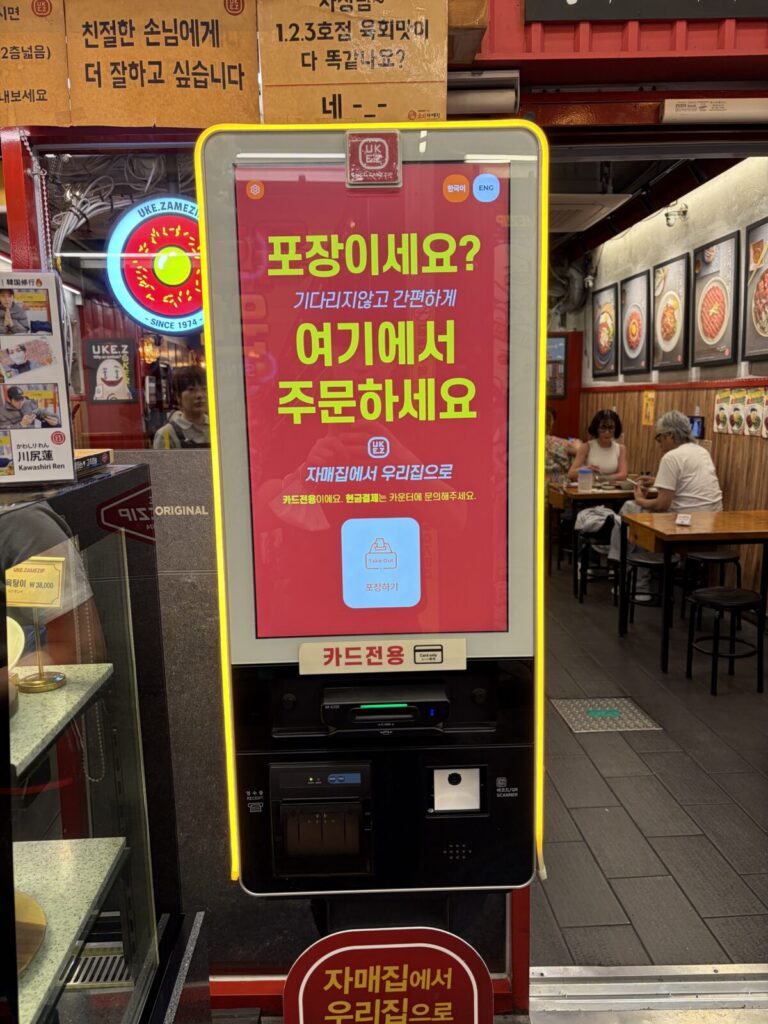
Near the entrance, there’s a separate self-service kiosk for takeout orders.
The kiosk also supports English, making it easy for international visitors to place an order.
If you’re planning to take your food back to your hotel, you can skip the dine-in queue and order directly from the kiosk.
It’s a simple way to save time during busy hours.
Expect a Wait During Peak Hours
Zamezip is one of the busiest restaurants in Gwangjang Market, so it’s common to see long lines during lunch, dinner, and weekends.
If both the original restaurant and No. 2 have long waits, I’d recommend checking No. 3 before deciding to stand in line.
All three branches are located close together, and based on my own visits, I haven’t noticed any meaningful difference in quality. Choosing the shortest line is usually the smartest option.
Popular Menu & Prices
(Prices at the time of my visit)
- Yuktangyi (Yukhoe + Live Octopus) – ₩35,000
- Yuksashimi (Raw Beef Sashimi) – ₩35,000
- Yukhoe – ₩21,000
- Live Octopus (Sannakji) – ₩17,000
- Mukeunji Yukhoe Bibimbap – ₩11,000
- Yukhoe Rice Bowl (Small) – ₩11,000
- Yukhoe Rice Bowl (Large) – ₩15,000
Prices may change over time, so it’s always worth checking the latest menu when you visit.
How to Get There
Zamezip is located inside the famous Yukhoe Alley in Gwangjang Market.
Take Seoul Subway Line 1 to Jongno 5-ga Station and leave through Exit 8. Once you enter the market, the restaurant is just a short walk away.
The original restaurant, No. 2, and No. 3 are all located within a few minutes of one another, so if one branch has a long wait, it’s worth checking the others.
Opening Hours
- Daily: 10:00 AM – 9:50 PM
- Break Time: 2:10 PM – 3:10 PM
Zamezip is open almost every day except on major holidays.
Because it’s one of the most popular restaurants in Gwangjang Market, some menu items may sell out before closing time. If possible, try to visit a little earlier, especially on weekends or during busy meal hours.

What I Liked
- After trying several famous yukhoe restaurants in Gwangjang Market, this is still the one I return to most often.
- The beef tasted noticeably cleaner than many other places I’ve visited.
- The rich sesame oil added even more depth to the flavor.
- The complimentary beef and radish soup was far better than I expected.
- The restaurant felt surprisingly clean and modern for a traditional market.
- The English tablet menu makes ordering easy for international visitors.
A Few Things to Keep in Mind
- Waiting times can be quite long during lunch, dinner, and weekends.
- Seating is a little compact, so it may feel tight if you’re traveling with large luggage.
- If you’ve never tried raw beef or live octopus before, the experience may feel a little intimidating at first—but that’s also part of what makes it memorable.
Would I Come Back?
Absolutely.
I’ve tried quite a few well-known yukhoe restaurants around Gwangjang Market, but Zamezip remains the one I come back to the most.
The clean flavor of the beef, the rich sesame oil, the comforting beef soup, and the overall dining experience keep bringing me back.
If I were introducing Seoul to a friend visiting Korea for the first time, this is the restaurant I’d confidently recommend.
Final Thoughts
There are plenty of places to eat yukhoe in Gwangjang Market.
After trying many of them myself, Zamezip has become the place I trust the most.
Whether it’s your first time trying yukhoe or you’re simply looking for a reliable restaurant inside the market, I think it’s an easy place to recommend.
Sometimes the restaurants you remember most aren’t the most famous ones—they’re the places you naturally find yourself returning to again and again.
Previous Post in Seoul
A Comfortable Stay in Hongdae, Seoul | Holiday Inn Hongdae
For the previous post, I’ll be sharing my stay at Holiday Inn Hongdae — a convenient hotel connected directly to Hongik University Station and surprisingly comfortable for exploring Seoul.
→ Read the review here